The Guide to Preventive Maintenance of Dental Units: How to Avoid Disruptive Breakdowns in Your Clinic?
For every dentist and clinic manager, the most stressful scenario is starting a workday accompanied by a disabling technical malfunction. When a dental unit breaks down, the immediate consequences include canceled appointments, loss of clinic revenue, patient frustration, and disruption to the staff schedule.
Although some malfunctions require skilled intervention by a dental equipment technician, a very high percentage of common malfunctions in chairs and handpieces can be completely prevented through a simple routine of preventive dental equipment maintenance.
To help you and your dental assistant team keep your medical equipment running smoothly, we have compiled the mandatory daily and weekly procedures that every clinic must implement.
1. End-of-Day Routine: Cleaning Suction Systems
During dental treatments, the suction system draws fluids, blood, saliva, and debris from dental materials. Accumulation of debris can clog the tubes and impair the vacuum pump’s suction power.
-
What to do? At the end of each workday, draw a dedicated disinfectant solution (non-foaming) through the unit’s suction tubes, and thoroughly clean the small filters located at the base of the system.
2. Handpiece and Turbine Maintenance
Rotating handpieces are the most sensitive and delicate instruments in the clinic. Lack of lubrication or use of incorrect air pressure are the main causes of premature bearing failure.
-
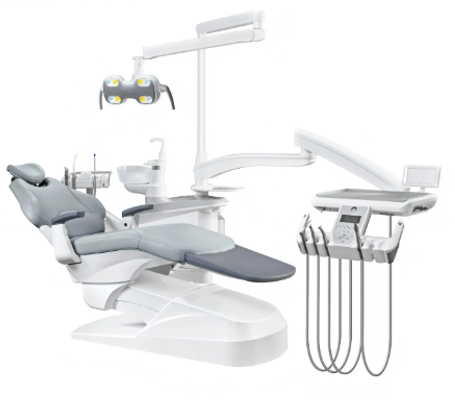
What to do? Lubricate turbines and micro-motors before each autoclave cycle. Additionally, it is recommended to ensure that your instrument tray includes a front-mounted pressure gauge (barometer) so you can verify that the air pressure in the dental turbine precisely matches the manufacturer’s specifications and does not wear out the instrument.
3. Cleaning and Disinfecting the Spittoon
The spittoon is the area most exposed to cross-contamination. Improper maintenance can create blockages in drainage pipes and unpleasant odors in the clinic.
-
What to do? Rinse the spittoon thoroughly after each patient. Using modern systems that include a removable spittoon allows the staff to easily and quickly detach the bowl, perform thorough disinfection, and prevent buildup of scale and debris in the connections.
4. Water and Air Quality Control
The clinic compressor and internal water systems must undergo regular drainage to prevent moisture infiltration and uncontrolled water pressure into the chair’s internal tubing.
-
What to do? Drain water from the compressor tank once a week (if using a compressor without an automatic drying motor) and check for water leaks at the base of the chair.
The Bottom Line: Your Professional Backup
Preventive maintenance preserves equipment value and reduces dental chair malfunctions, but true peace of mind comes from knowing you have a professional partner in critical moments.


