The Complete Guide to Choosing a Dental Unit for Your Dental Clinic
Purchasing a dental unit (dentist’s chair and associated systems) is one of the most significant financial and strategic investments in the life of every dentist and clinic manager. This is not just about choosing a comfortable piece of furniture for the patient, but about establishing a complex operational system that forms the very heart of clinical activity.
A properly chosen chair can improve work speed, prevent chronic back pain among staff, and create a premium patient experience that increases treatment plan acceptance rates. Conversely, a wrong choice can lead to debilitating malfunctions and damage to the clinic’s reputation.
So how do you correctly choose dental clinic equipment and what are the technological parameters you must not compromise on? We have compiled the most important key points for you.
1. Ergonomics and Efficiency: Human Engineering That Works for You
Many dentists suffer from orthopedic problems due to long working hours in fixed positions. Therefore, the first parameter in evaluating a dentist’s chair is its ergonomics—both for the dentist and assistant and for the patient.
Smart Memory System: While simple chairs exist on the market, advanced units offer pre-programmed work memories. For example, a system with 9 work memories allows each dentist in the clinic to set, with a single button press, the most precise position for them and for the type of procedure (examination, injection, or surgery), saving valuable time and streamlining workflow between patients.
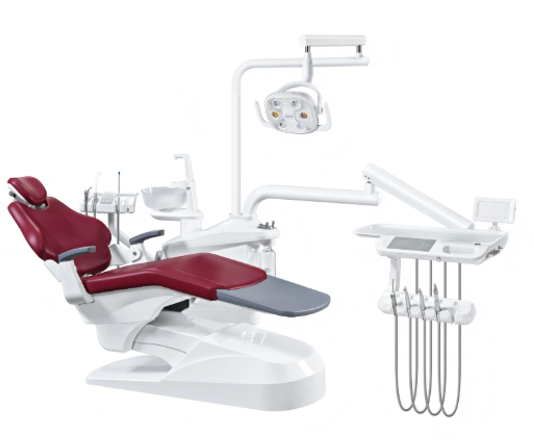
Type of Instrument Tray Mounting: The choice between top-mounted (continental) and bottom-mounted suspension directly affects your freedom of movement. A bottom-mounted instrument tray (Down-mounted) provides a cleaner appearance, reduces strain on the staff’s hands, and allows quick and convenient access to every instrument.
2. Material Quality and Chassis Durability: Heavy Duty or Warping Plastic?
A dental unit bears heavy loads and is exposed to constant movement and strong disinfectants throughout the day.
When evaluating models, do not look only at the outer plastic shell. Ask the importer what the chassis and instrument tray base are made of. While inexpensive units use plastic bases that tend to wear, crack, and vibrate the instruments during treatment, premium units include a bottom base made of cast aluminum. Cast aluminum ensures absolute mechanical stability, prevents vibrations in handpieces, and provides durability for years to come.
3. Clinic Lighting: Color Accuracy and Touchless Control
One of the most influential elements on treatment quality (especially in aesthetic dentistry) is the treatment light.
Advanced LED Technology: It is recommended to choose a light source from a recognized global brand (such as Philips LED), which allows dynamic transition between light intensities (for example, from 8,000 to over 30,000 lux) and control of color temperature. This precision is critical for matching porcelain and composite shades.
Maximum Hygiene (Stepless Dimming & Sensors): To maintain sterilization, look for lights that incorporate an infrared sensor (touchless sensor) for continuous dimming. This control prevents the dentist from physically touching the light during treatment with contaminated gloves.
4. Hygiene and Sterilization: The Heart of Clinic Safety
The spittoon is the most sensitive area in terms of infection in the clinic. Modern dental units place tremendous emphasis on quick disinfection solutions for the assistant staff. Units equipped with a premium detachable spittoon made of ceramic or glass allow quick disassembly, thorough disinfection between patients, and an elegant, clean, and luxurious appearance that contributes to your patient’s sense of security.
5. Pressure Control and Real-Time Safety
Working with turbines, micromotors, and water systems requires constant monitoring. The presence of a front-facing, visible barometer on the instrument tray allows the dentist to conveniently monitor, at any given moment, the air pressure passing through the handpiece tubing. This monitoring prevents irreversible damage to expensive turbines and maintains patient safety.
Summary: Do Not Just Buy a Product, Buy Service and Professional Support
Ultimately, the technical specifications of the dental unit are critical, but the most important factor is the professional support and customer service of the importer. Medical equipment requires precise installation, professional calibration, and the knowledge that in real time—if there is a malfunction—a professional technician arrives immediately so the clinic does not lose working days.


